
Barcelona doesn’t just display Picasso. It made him.
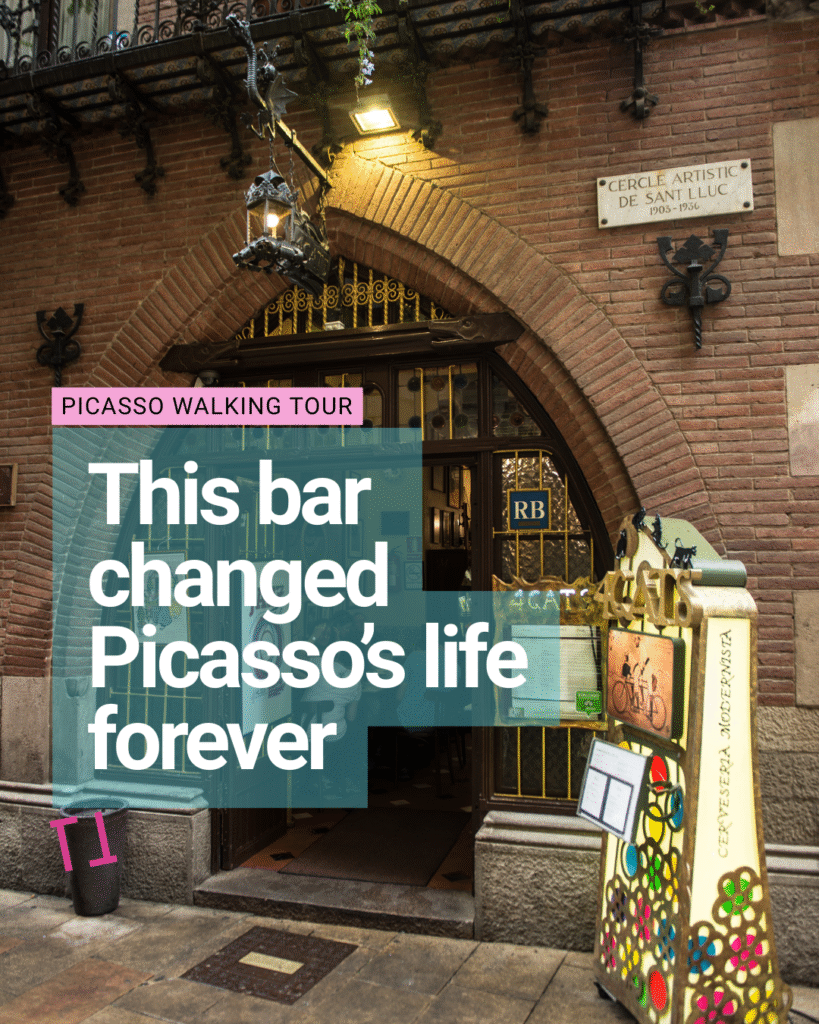
In 1899, a skinny teenage newcomer with a sharp gaze and quicker pencil started turning up at a bohemian café tucked behind Plaça de Catalunya. He was only 17. Within months, he had designed one of the venue’s most famous posters and pinned his first solo exhibition to its walls. That café was Els Quatre Gats, and the kid was Pablo Picasso.
If you’re visiting Barcelona today, you can still walk the streets that shaped his early years: the smoky Modernist hangouts, the narrow Gothic lanes, and the museum that holds the most intimate record of his youth. This guide takes you through Picasso’s Barcelona step by step—so you’ll understand not only where he was, but who he became here, and why it matters for your trip. By the end, you’ll know exactly how to trace his story on foot—and how to experience it in the richest, most unforgettable way.
Picasso arrived in Barcelona as a teenager in the mid-1890s, when his family relocated from Málaga. He enrolled at La Llotja, the city’s prestigious fine-arts school, and quickly outpaced older students with a mix of technical discipline and restless ambition.
But the real education wasn’t only in classrooms. Between 1897 and 1904, Barcelona was a creative furnace: Modernisme was exploding in architecture, literature, and design; new cafés and cabarets served as laboratories for ideas; and young artists were hungry to reinvent culture in a rapidly modernizing city.
The Barcelona Picasso encountered was both elegant and edgy. On one side: grand boulevards, new wealth, and ambitious civic projects. On the other: crowded alleys, radical politics, and a nightlife where painters, poets, and musicians argued until dawn. The tension between tradition and experimentation is exactly what hooked him. You can feel it even now in the city’s contrasts—the Gothic Quarter pressed against airy Modernist streets, antique stone giving way to iron, glass, and imagination.
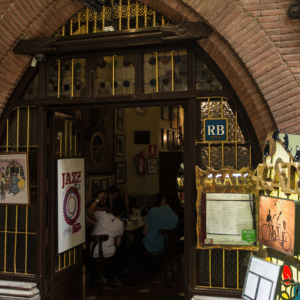
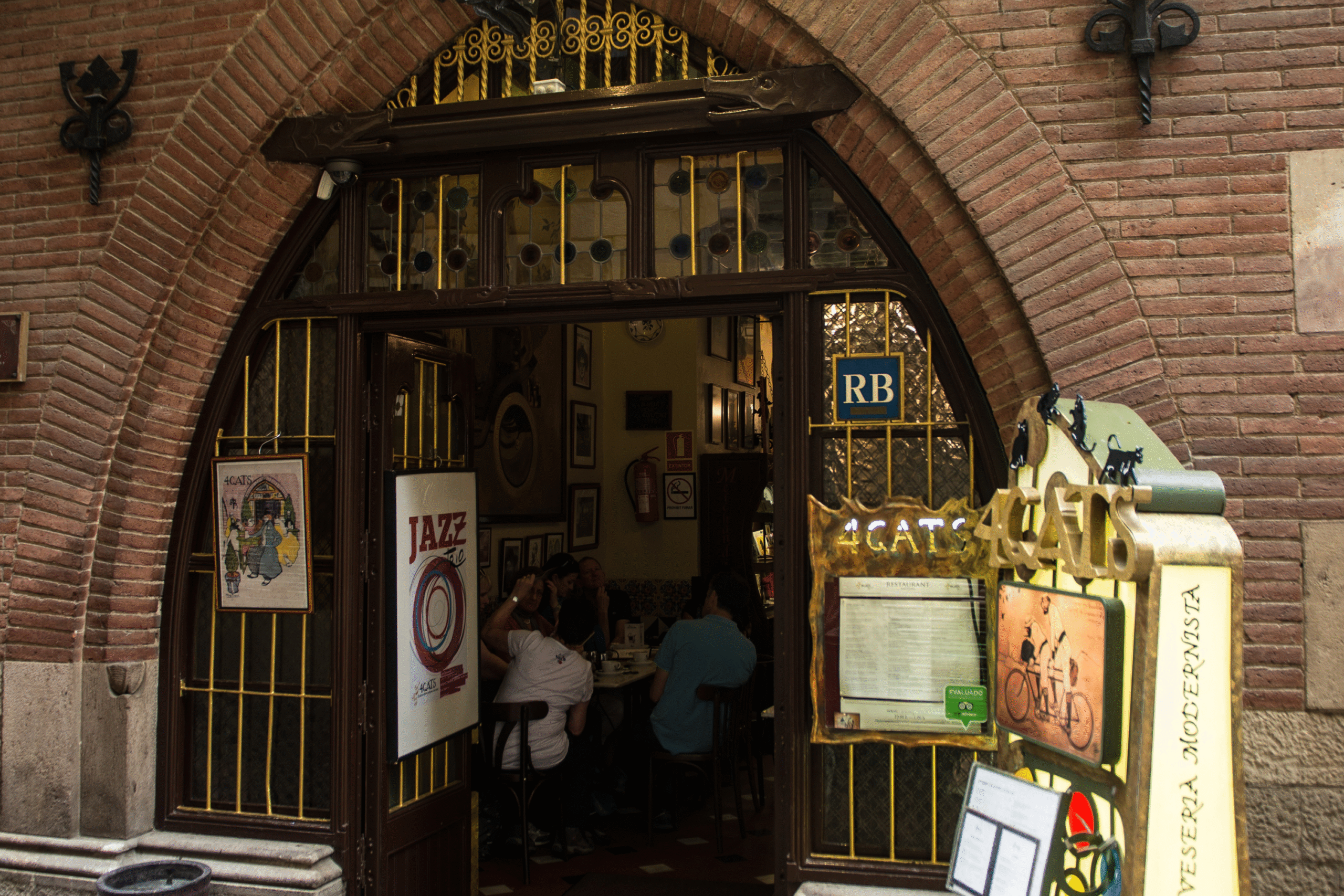
Els Quatre Gats opened on June 12, 1897, inside Casa Martí, a striking Modernist-neo-Gothic building designed by Josep Puig i Cadafalch. From the start it was meant to be more than a bar: think café, cabaret, artistic salon, and unofficial headquarters of Barcelona’s bohemia rolled into one.
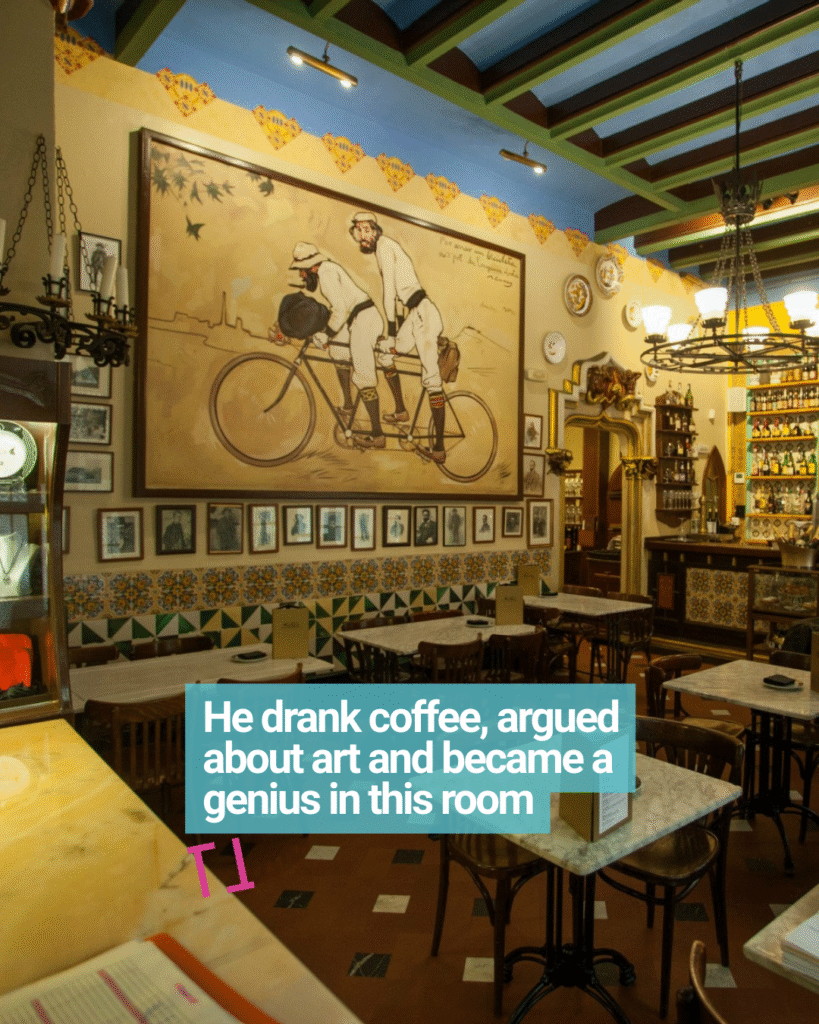
Regulars included key Modernist figures like Ramon Casas and Santiago Rusiñol, along with musicians, writers, architects, and the kind of eccentric locals who make cultural revolutions possible. The place hosted concerts, poetry readings, shadow-theater shows, and impromptu debates that could swing from aesthetics to anarchism in a single espresso.
When Picasso started frequenting Els Quatre Gats in 1899, he was still an outsider—young, broke, and ferociously observant. The café became his social engine. Here he met fellow artists, found mentors, and tested ideas in real time.
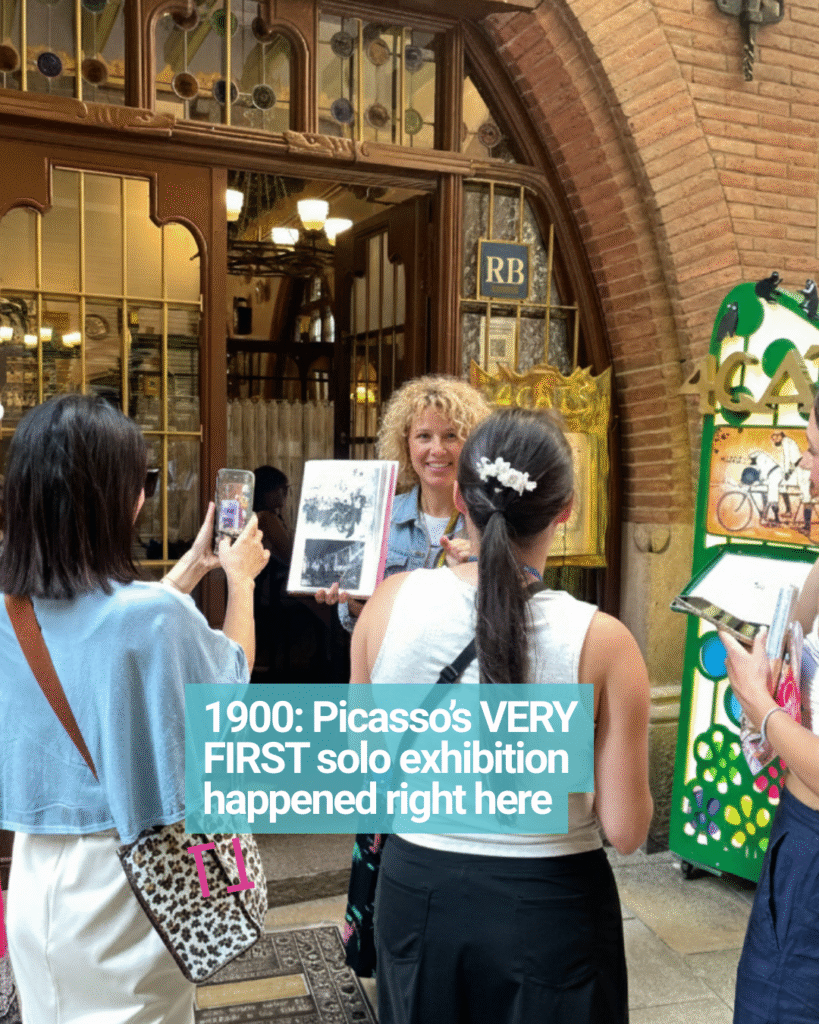
Most famously, he designed an iconic poster for the café and even contributed artwork to its printed materials, proof that his talent was already recognized by Barcelona’s tastemakers. Then, in February 1900, Els Quatre Gats hosted Picasso’s first solo exhibition, a collection of drawings and portraits pinned to the walls like a manifesto from a teenager who knew he was going somewhere big.
Try to imagine him here: coffee cooling beside a sketchbook, cigarette smoke twisting under Modernist lamps, friends leaning in to critique a line or praise a shadow. Those nights weren’t glamorous in the usual sense—they were urgent. Picasso absorbed everything: the theatricality, the sarcasm, the money-less freedom, the city’s pulse. And he began refining the gaze that would later break the rules of representation.
Visiting Els Quatre Gats today: You’ll find it on Carrer de Montsió, a 2-minute walk from Plaça de Catalunya. Go early in the morning for a quiet look at the façade and interior, or in the evening if you want to feel a hint of its old café energy. Inside, look for Modernist details, vintage posters, and the sense of tight, intimate space—exactly the kind of room where ideas ricochet.
A short walk downhill from Els Quatre Gats, the Gothic Quarter narrows into streets that still feel unchanged from Picasso’s time. One of them is Carrer d’Avinyó. The name might sound French, but the reference is Barcelona-specific: the street once had several brothels, and it lodged itself in Picasso’s memory.
Years later, in 1907, Picasso painted Les Demoiselles d’Avignon, a work that detonated the old rules of Western art and lit the fuse for Cubism. The title—given after the painting was made—points back to this Barcelona street and its atmosphere of raw, unsettling modern life.
What matters for visitors isn’t the scandal. It’s the continuity. Barcelona wasn’t a “phase” in Picasso’s biography; it was a visual vault. The faces, spaces, and tensions he witnessed here kept resurfacing in his imagination, mutating into something radical once he was ready. Walking Carrer d’Avinyó today, you’re not looking for a museum plaque—you’re sensing the seedbed of a revolution.
If Els Quatre Gats is where Picasso learned to be an artist in public, the Picasso Museum is where you see what that learning produced.
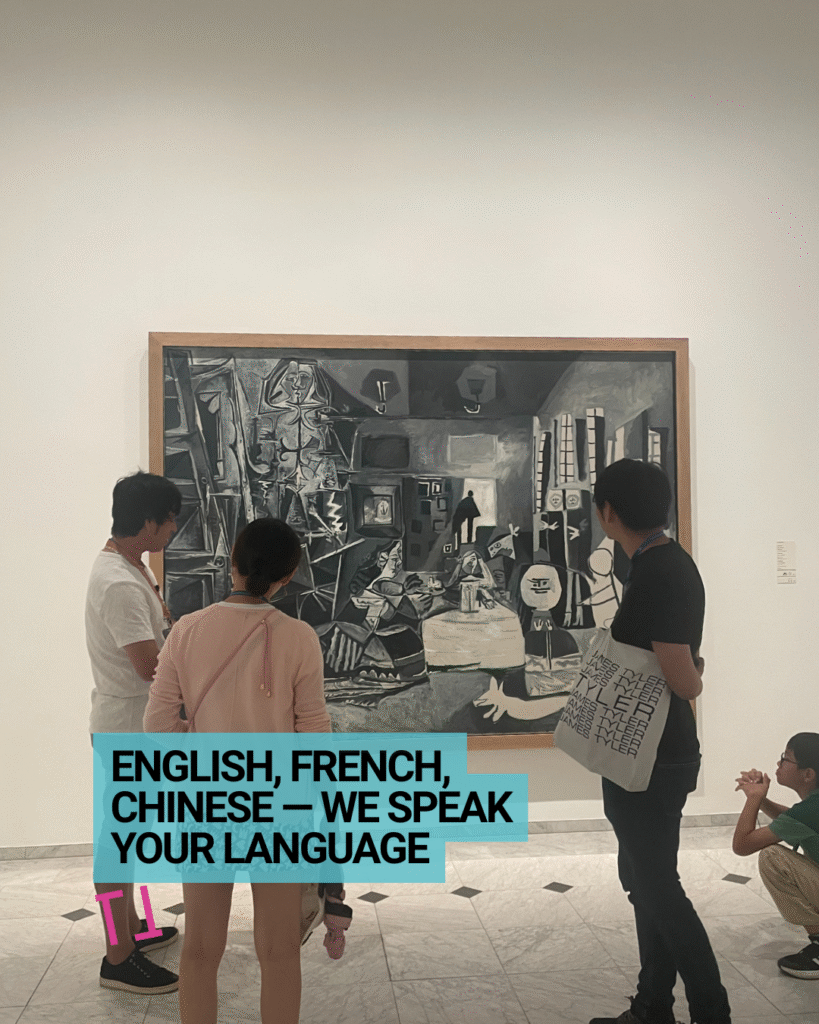
The museum sits in five interconnected medieval palaces on Carrer Montcada, in the El Born neighborhood—one of the most beautiful historic settings in the city. Its permanent collection includes over 4,000 works (some sources cite around 5,000), with a focus on the artist’s formative years—exactly the period Barcelona shaped.
What you get here isn’t just a greatest-hits gallery. You get a narrative:
Practical tips: Book tickets in advance if you’re visiting in high season; queues can be long. Aim for an early time slot to enjoy the rooms before they fill up, and give yourself space to slow down in the early galleries—those are the key to understanding Picasso in Barcelona.
Want a quick self-guided Picasso Barcelona walking tour? Here’s a compact route you can do in a morning or afternoon:
Even if you never book a tour, this walk will make Barcelona feel more personal—like a city you’re reading rather than just visiting.
A self-guided route is a great start. But Picasso’s Barcelona is full of invisible threads: friendships that changed his direction, small symbols that foreshadowed entire movements, and street corners that mean nothing until someone tells you why.
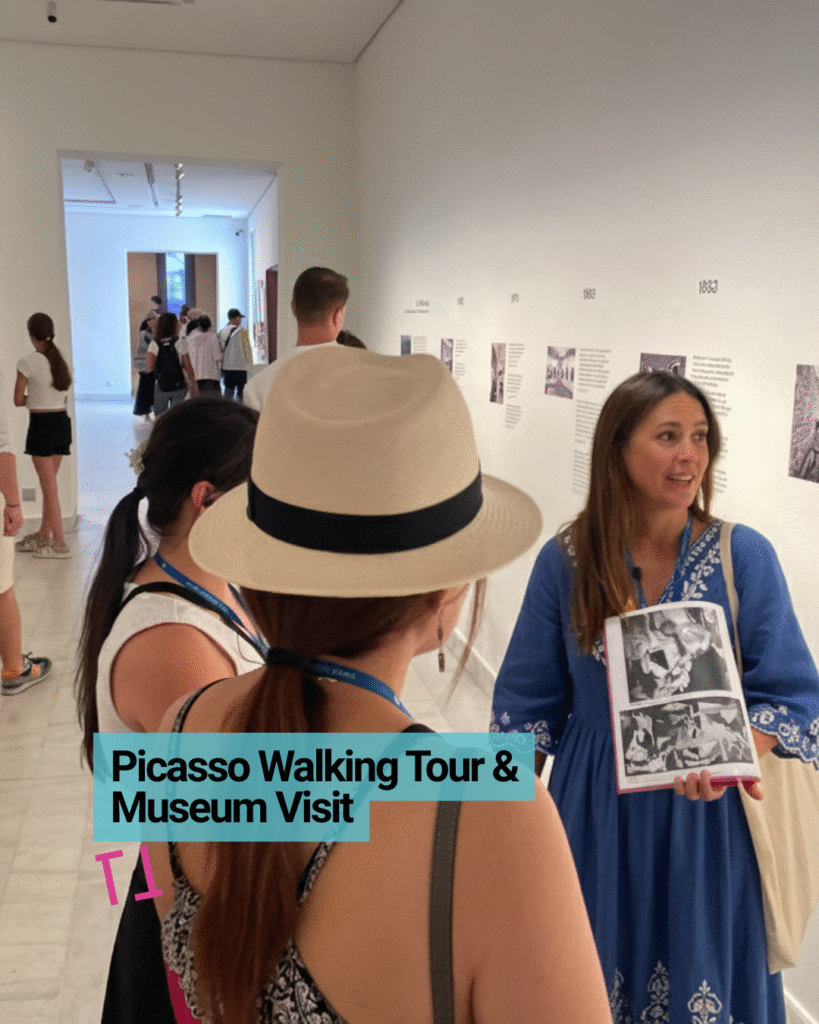
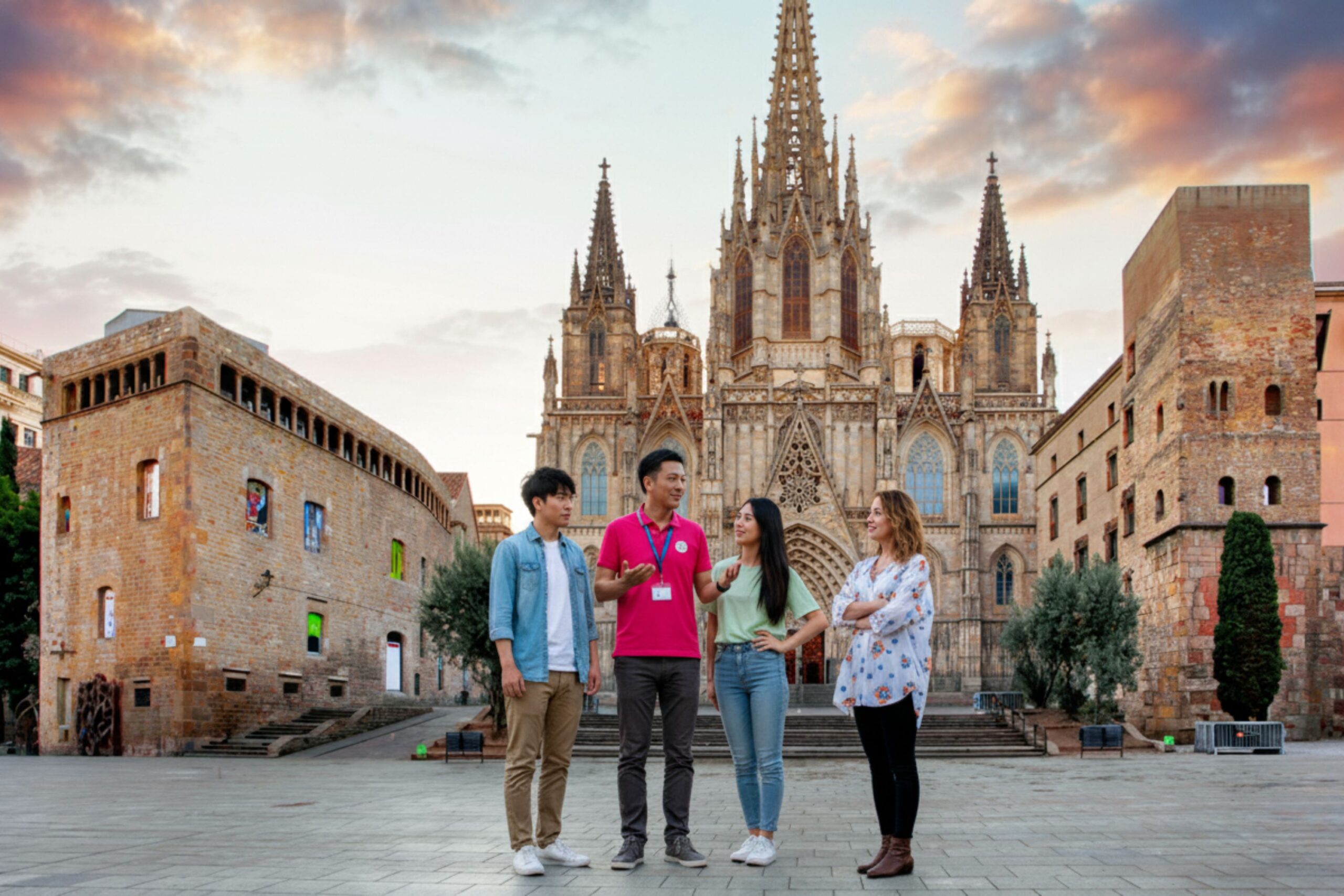
That’s why TecTickets created the “Barcelona: Picasso Walking Tour & Museum Visit.” In about 2–3 hours, you’ll follow a carefully curated route through the places that shaped young Picasso—Els Quatre Gats, the Gothic Quarter’s key corners, Carrer d’Avinyó—and then step into the Picasso Museum with a guide who helps the early works click. Small groups keep it personal, and multiple language options make it easy to fit into your trip.
The payoff is simple: you don’t just see Barcelona. You see it through 17-year-old Picasso’s eyes, and suddenly the city becomes a living studio.
Els Quatre Gats was Picasso’s first real artistic home in Barcelona. At 17 he designed a poster for the café, joined its Modernist circle, and held his first solo exhibition there in 1900. It helped launch him into the city’s avant-garde scene.
Picasso studied at La Llotja and moved between studios and rentals around the old city, including spaces near Nou de la Rambla. He spent much of his social and creative life in bohemian cafés like Els Quatre Gats and the surrounding Gothic Quarter.
Absolutely, especially in Barcelona. The museum holds over 4,000 early works in five medieval palaces, giving the best window into Picasso’s formative period. You’ll see his training, early experiments, and the roots of later breakthroughs.
Most Picasso walking tours in Barcelona last 2–3 hours. That length allows time for key outdoor sites like Els Quatre Gats and Carrer d’Avinyó, plus a meaningful museum visit without feeling rushed.
The painting’s title refers to Carrer d’Avinyó, a Barcelona street associated with brothels in Picasso’s youth. The memory of that street fed into the theme and helped inspire the work that sparked Cubism.
Start with the earliest rooms to understand his academic skill and evolution. Don’t miss the transition toward the Blue Period and the museum’s strong selection of youthful sketches and studies—these are the clearest “Barcelona fingerprints.”
Morning is best for quieter streets and a calmer café visit. The Picasso Museum is also easiest early in the day or on weekdays. Booking timed tickets (or a guided visit) helps avoid long lines.

Yes. Picasso’s early Barcelona story is easy to love even if you’re not an art historian. The sites connect directly to the city you’re already exploring, and the narrative is about youth, ambition, and reinvention—very human themes.
Picasso’s legend didn’t begin in a Paris studio. It began in Barcelona—on café chairs, in Gothic streets, and in a city alive with Modernist risk. At 17, he walked into Els Quatre Gats as a hungry teen and walked out as a young artist with a tribe, a voice, and momentum. Those early years are still etched into the city if you know where to look.
So when you’re planning what to do in Barcelona, don’t just visit Picasso as a museum figure. Meet him as a teenager, a friend, a provocateur in the making. Walk his route, let the city tell you its side of the story, and if you want the deepest version of it, join a guided experience that brings every stop to life. Barcelona is one of the few places on earth where you can feel an artist becoming himself. Don’t miss that feeling.